
True leadership is hard to define, but its absence isn’t
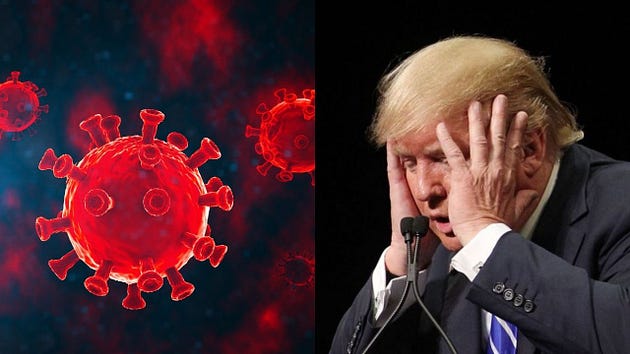
As I listened to Brad Parscale, President Donald Trump’s former Campaign Manager, on the outcome of the 2020 Presidential Campaign on Fox News last Tuesday night commenting that had the President simply leaned into Covid-19, rather than running from it and otherwise denying its existence, he would have won the election by a landslide. Reluctantly, I had to agree. After all, it didn’t have to be this way at all.
Nobody in this country blamed Donald Trump in any way for having precipitated or caused the Coronavirus. Virtually nobody would have faulted him for not being able to contain the economic devastation that a global pandemic would have created on the United States’ economy. So, battling a one-hundred year flood called COVID-19 — being an empathetic and firm voice directing a national response — could have been a shining moment for Trump to assert his leadership not only in this country, but on the international stage. Instead, for whatever reason, as incomprehensible as his response was, it brought to mind for me what happens when leadership is present and even worse, what happens when it is not.
There has been no shortage of surprises in Donald Trump’s presidency, particularly in his leadership style. Putting the coronavirus aside for a moment, other areas surface just as prominently. For example, one that cuts to the heart of Trump’s incomprehensible sense of self — as a leader and President — is his repeated self-comparisons to Abraham Lincoln — a leader to whom, party aside, Trump bears absolutely no resemblance.
“I’ve done more for Black Americans, in fact, than any President in U.S. history, with the possible exception of another Republican President, the late, great, Abraham Lincoln,” he tweeted in June. On more than one occasion Trump has even taken credit for informing the American people of Lincoln’s party affiliation — a fact he curiously believes was lost to history. The irony is that their shared party affiliation is a superfluous fact — and it is certainly not what made Lincoln great. In his repeated comparisons, Trump fails to recognize the tenuousness of his own leadership style and the very nature of what constitutes sound presidential leadership.
Fortunately, the American public had a better sense of that truth, as demonstrated in a 2007 Rasmussen poll. It showed six presidents across the political spectrum rated positively by at least 80% of Americans: George Washington, Abraham Lincoln, Thomas Jefferson, Theodore Roosevelt, Franklin D. Roosevelt and John F. Kennedy. Their common ground? Each was a great, inspirational leader, with those qualities visible to the American people, throughout the annals of American History.
One thing two of those Presidents do have in common with Trump is that both Abraham Lincoln and Franklin D. Roosevelt faced great challenges during their time in office, as Trump has with the ongoing pandemic. How they responded, on the other hand, is very different, reflecting a lesson not just on good leadership, but on how an electorate should select those leaders.
For Lincoln, the crisis was, of course, the civil war. In Trump’s world view Lincoln won the affections of the people when he ended slavery. What he does not see are the minutiae of how that historical feat was achieved in a way that kept the nation united — despite it being arguably more divided than at any other point in our prior history. It fell upon Lincoln to keep the Union together, and he faced that challenge head on — even if it meant taking the nation to war, as it did. Lincoln was willing to bet his name, his government and even the lives of the American people on a war he believed would right wrongs and channel the nation’s path to a better future.
Less than 75 years later, after Lincoln literally saved the Union the first time, FDR had to save it yet again — dealing with the Great Depression and then World War II, challenges he handled with decisive action and inspiring leadership. In his first hundred days — that is where today’s 100 Day Agenda comes from — he launched a barrage of legislative measures designed to deal with the national emergency. Eight years later, the Japanese attacked Pearl Harbor and the U.S. was forced into another world war. FDR’s comforting radio broadcasts kept spirits high and assured Americans there was both a plan and a way through each tumultuous turn they were experiencing. Never sugar-coating the truth, FDR calmed America’s nerves.
On the other hand, Trump’s penchant for tweeting — including a dizzying avalanche of false claims and/or self-congratulating boasts during the course of a devastating pandemic — is a poor imitation indeed.
Lincoln and Roosevelt hailed from different parties and eras, but they shared the same qualities so vital to leadership: resilience, determination, a plan and, most importantly, a clear desire to lead and to be tested. Historian Doris Kearns Goodwin — who literally wrote the book on presidential leadership — was recently asked what Lincoln, FDR, Teddy Roosevelt and Lyndon B. Johnson had in common. While insisting there’s “no master recipe,” she noted a “family resemblance of leadership traits”:
They did seem to combine in their leadership empathy, that either they were born with or developed; resilience to get through adversity; their ability to control emotions; their ability to learn how to think and relax their temperaments so that they were able to replenish their energy. The capacity to communicate in a way that people felt trust in their words. Curiosity. Energy is huge. And two things, most importantly: hard, sustained work, and an ambition that starts out maybe for themselves, but then ends up for a larger cause.
It appears beyond dispute that each of these qualities — with perhaps the exception of energy and a kind of spiky resilience — are demonstrably lacking in Donald Trump. And with catastrophic results.
The pandemic could have been an opportunity for rehabilitation: decisive leaders from Germany to Japan have enjoyed a bounce in opinion polls. Yet without a specific path, clearly communicated, and without a show of empathy and humility in the face of a force greater than himself, Trump’s true nature as a person — his character as a President — was exposed for all to see.
From the very start, and in stark contrast to Lincoln and Roosevelt, Trump refused to face his great challenge head on. He instead chose to deceive the public and downplay Covid-19, comparing it to the fluand calling any attempt to critique his policies or present the facts of the virus as a Democrat-led “hoax”. In times of strife when it would have been so beneficial to pull together, share the load and spearhead a bipartisan plan of attack, he failed to unite and instead stoked partisan conflict. At the same time, in recorded interviews, he was telling Bob Woodward that he knew Covid-19 was “deadly stuff… more deadly than your even strenuous flus”. When a national emergency was finally announced on March 19th, Trump admitted to Woodward that he always planned to play the virus down: “I still like playing it down, because I don’t want to create a panic.”
The result of his cavalier relationship with truth and his reluctance to listen to science are plainly and painfully visible in this montage of his ever-evolving Covid-19 death forecasts, which went from “near zero” to “over 100,000 perhaps” in five months. Devastatingly, even this chilling estimate turned out to be optimistic. At the time of writing, more than 15.5 million Americans have tested positive and 300,000 have lost their lives to the virus, as the country leads the world in infection rates. Trump’s response to that fact is a classic signal of his brand of leadership — he claimed it was the result of advanced testing.
In this attempt to transform an undeniably tragic fact into a testament to his own prowess as a President, his leadership characteristics became transparent. While Lincoln and Roosevelt may have been driven initially by ambition when faced with great challenges, their drive came from without; it came from a nation’s need. Trump’s drive has always come from within — from an overwhelming narcissism; a desire to prove he is the best. And even now — it is playing out in his refusal to accept the inconvenient fact that he could lose the election legitimately, even though he lost it decisively, as he trapses around the country soliciting courts to hear his cases and the media to put him back on the air, where he can perhaps be relevant again.
On a fundamental level, Trump failed to lead, instead opting to push responsibility for the pandemic on to state-level governments. While proclaiming premature victory, he had already washed his hands of the problem. True leaders grasp the opportunity to put their unique skills into genuine use in a national emergency. Trump, by contrast, wanted to wish it away like so much ‘fake news’, even claiming this past February: ‘one day — it’s like a miracle — it will disappear’.
In his own curious way, Trump seemed to understand what a true leader should look like. In one of his earlier comparisons to Lincoln, he said: “I’ve always said I can be more Presidential than any President in history except for Honest Abe Lincoln, when he’s wearing the hat,” he said. “Being Presidential is easy: all you have to do is act like a stiff”.
Even Trump’s biggest supporters must find it difficult to deny that acting “Presidential” was ultimately not in Trump’s skillset. But the pandemic was his opportunity to prove that he was more than his self-aggrandizing, back-slapping, P.T. Barnum, TV personality suggested. It was his chance to demonstrate that authentic leadership can come in all shapes and sizes, given the right interior character. Despite the Trump PR machine, citing his superlative leadership skills time and again, it’s clear there has never been a hidden interior to Trump that would see this country through one of the worst national emergencies in modern history. And while the Republican Party members who closed ranks around Trump — attempting, perhaps, to protect the Party’s reputation by protecting its leader — hold some responsibility for reinforcing Trump’s rhetoric and promoting his emperor has no clothes fake version of reality, the buck does stop with leadership. And on this, the American people must take note.
Nobody saw Covid-19 coming, of course, including candidates running for office. But it’s a timely reminder — and a good opportunity to note — that the person you vote for won’t just be managing the day-to-day challenges of office. They will almost assuredly — in this complex society we inhabit in the 21st Century — be tested in a very real way. When a once-in-a-generation crisis arrives — as it did for Lincoln, Roosevelt and Trump — you want the person with the right skills in the job. As a country, we must look for those elusive qualities on the campaign trail, regardless of Party affiliations.
Our job is to elect the candidate with the right leadership characteristics, not simply the right Party credential or who passes our litmus test of beliefs. Hopefully that individual will never be tested. But if they are, we must now acknowledge with unfortunate certainty, that the consequences of failure — failure of character and of action — are catastrophic and deadly.
Our commander-in-chief — the most powerful elected official in the world –must be up to the challenge . . . and we must be certain that he or she carries the nation’s best interests at heart. Trump, when tested, was found wanting. Let’s all hope our next President isn’t.